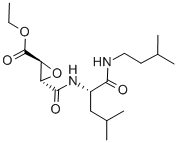
est ; ep453 ; oxiranecarboxylicacid, 3-[[[(1s)-3-methyl-1-[[(3-methylbutyl)amino]carbonyl]butyl]amino]carbonyl]-,ethyl ester, (2s,3s)- (9ci) ; e 64d (aloxistatin) ; estate ; ep 453 ; e64d,e-64d ; 2-oxiranecarboxylicacid,3-[[[(1s)-3-methyl-1-[[(3-methylbutyl)amino]carbonyl]butyl]amino]carbonyl]-,ethyl ester, (2s,3s)- ; oxiranecarboxylic acid,3-[[[3-methyl-1-[[(3-methylbutyl)amino]carbonyl]butyl]amino]carbonyl]-, ethylester, [2s-[2a,3b(r*)]]- ; e 64d ; oxistatin ; e-64d ; aloxistatin ; est (pharmaceutical) ; nsc 694281 ; loxistatin ; e 64c ethylester ; loxastatin
Description
E-64-d is a derivative of the membrane permeant E-64c and acts as a potent inhibitor of thiol protease. The compound can permeate an intact cell and block the activity of calpain, which results in the protection of protein kinase C (PKC) from proteolysis. E-64-d is also a cathepsin B, cathepsin H, and cathepsin L inhibitor. Research shows that E-64-d can enhance compromised natural killer cells and bactericidal activity of leukocytes. In addition, E-64-d has been shown to induce cell cycle arrest during prophase and metaphase in Xenopus embryonic cells.
Soluble in ethanol (>10 mg/ml), DMSO (20 mg/ml), DMF (30 mg/ml), and 1:1 DMSO:PBS (pH 7.2) (~0.5 mg/ml). Insoluble in water.
x
Safety & Transport Information
Moderately toxic by intraperitoneal route. An experimental teratogen. Experimental reproductive effects. Mutation data reported. When heated to decomposition it emits toxic fumes of NOx.
Risk Codes:
R36/37/38 - Irritating to eyes, respiratory system and skin
Safety Codes:
S26 - In case of contact with eyes, rinse immediately with plenty of water and seek medical advice S36 - Wear suitable protective clothing
Hazard Symbols:
Xi
Storage temperature :
-20°C
x
Alternative Distributors of [E-64-d]
Producers or manufacturers change the product range from time to time. Currently there are no other manufacturers known.

 Element:

 Chemical-Suppliers.eu